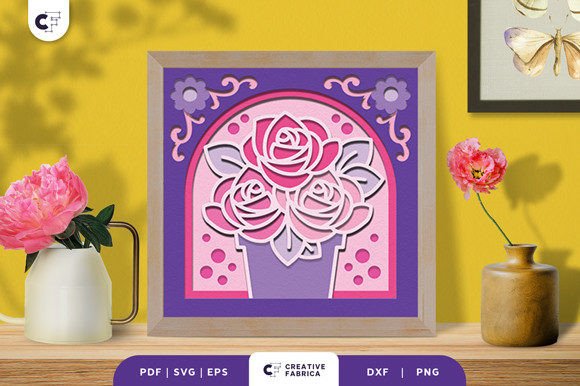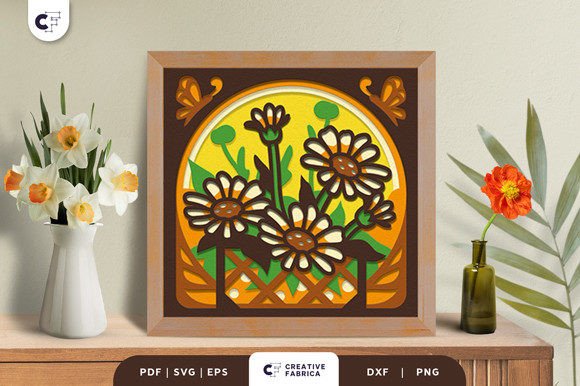
Potted Daisy Flower 3D Shadow Box Review
As a designer who spends more time staring at stitch maps than actual flowers, I approach every new machine embroidery design with a mix of curiosity and skepticism. We all know the feeling: you see a cute preview image, but will it actually translate well to fabric? Today, I am taking a close look at the Potted Daisy Flower 3D Shadow Box. This isn't just about whether it looks pretty on a screen; it is about how it performs when the needle hits the cloth in a real-world embroidery project.
The first thing that strikes me about this design is its mood. Daisies have always been the universal symbol of innocence and new beginnings, and this specific layout captures that spirit without feeling childish. The inclusion of little butterflies adds a layer of whimsy that elevates it from a simple floral motif to a storytelling piece. Visually, the composition feels balanced. It has the structured charm of a botanical illustration but retains the softness required for textile art. For those of us working in Floral Compositions, finding a design that bridges the gap between modern graphic trends and traditional embroidery aesthetics is rare.
Real-World Application: The Boutique Tote Scenario
To truly evaluate the Potted Daisy Flower 3D Shadow Box, I imagined a specific client request. Let's say a local boutique owner wants a line of reusable market bags for their spring collection. They need something that says "fresh" and "handmade" but also needs to withstand the rigors of carrying groceries. This is where the design shines.
On a canvas tote bag design, the potted element provides a natural bottom weight, grounding the composition so it doesn't look like it's floating aimlessly. The butterflies offer dynamic movement, drawing the eye upward. If I were stitching this for a small shop product, I would lean into the "3D" aspect mentioned in the title. By using a slightly heavier stabilizer and perhaps varying the thread colors with a subtle gradient in the petals, you can create genuine depth. This transforms a flat digital embroidery file into a tactile experience for the customer.
However, the "3D Shadow Box" descriptor suggests a layered effect. In embroidery terms, this often implies complex layering or specific stitch types meant to mimic depth. When planning this for commercial embroidery, you must consider the bulk. On a thick tote bag, this is fine. But if you are attempting this on a lighter fabric, that density could become an issue.
Versatility Across Products
Beyond tote bags, where else does this design fit? The innocence of the daisy makes it a prime candidate for baby embroidery. Imagine this stitched onto a muslin swaddle blanket or a denim romper. The soft curves of the petals work beautifully against the rugged texture of denim, creating a nice contrast in a finished product. It would also make a delightful personalized gift for a new mother, representing those fresh starts we all cherish.
For the Etsy seller looking to expand their catalog, this design offers flexibility. It could easily be adapted for sweatshirt embroidery, placed centrally on a crewneck for a vintage garden vibe. The key here is scale. Because the design includes detailed elements like butterflies and a pot, shrinking it too much for a small pocket logo might lose those intricate details. Conversely, blowing it up for a large pillow cover could expose gaps in the fill if the stitch density isn't optimized for larger scales.
I also see potential in home decor. A set of kitchen tea towels featuring this motif would sell well as a holiday embroidery gift for housewarmings or Mother's Day. The vertical orientation of the potted flower fits the narrow shape of a towel perfectly, maximizing the usable embroidery area.
Technical Considerations and Fabric Choices
Let's get into the nitty-gritty technicalities that separate a hobbyist from a pro. While the Potted Daisy Flower 3D Shadow Box is visually appealing, it demands respect regarding fabric choice. The description hints at a 3D effect, which usually requires precise registration between layers.
If you are working with stretchy fabrics like jersey knits for custom apparel, you must be vigilant. The dense areas of the pot and the flower centers can cause puckering if the stabilizer isn't robust enough. I always recommend testing on scrap fabric first. Cut a piece of your intended material, hoop it with your chosen stabilizer, and run the design. Check the back of the hoop. Is the backing showing through? Are the stitches sinking into the pile of the fabric?
Texture is another factor. This design would struggle on highly textured fabrics like bouclé or heavy tweed. The fine lines of the butterfly wings and the definition of the daisy petals need a smooth surface to pop. On a rough surface, those details get lost, and the embroidery file loses its impact. Similarly, be cautious with dark fabrics. If the design relies on light thread colors for the daisies, ensure there is sufficient underlay or a backing layer to prevent the dark fabric from shadowing through the white petals, which can make the flowers look gray and muddy.
Design Assets and Business Value
From a business perspective, incorporating the Potted Daisy Flower 3D Shadow Box into your library of design assets can boost your brand's perceived value. Customers associate high-quality, detailed florals with professionalism. When a buyer sees crisp satin stitch edges and well-defined fill stitch areas, they trust the maker more. It signals that you care about the quality of your handmade product.
For digital product sellers, this design could be part of a bundle sold as a printable mockup resource or a standalone applique design file. However, before selling, you must verify the licensing terms. Just because you bought the file doesn't automatically mean you can resell the digitized file itself. Usually, you can sell the finished product (the stitched item), but redistributing the 3D SVG or embroidery source files is often restricted. Always read the fine print to protect your craft business.
Final Designer Notes
Before you commit to a full production run, keep these practical tips in mind:
- Check the Hoop Size: Ensure the design fits within your machine's maximum hoop size. A vertical potted design can be surprisingly tall.
- Thread Contrast: Play with thread weights. Using a slightly thicker thread for the pot outline and a finer thread for the butterfly details can enhance the 3D illusion.
- Mockup Testing: Create black and white mockups to check the value contrast. If the design looks flat in grayscale, it might lack definition in real life.
- Washability: If this is for an item that will be washed frequently, like a baby bib or apron, ensure the stitch density isn't so high that it creates a stiff, cardboard-like patch.
- Curved Surfaces: Be very careful applying this to caps. The curved brim can distort the circular nature of the flower pot, making it look oval or warped.
In conclusion, the Potted Daisy Flower 3D Shadow Box is a charming addition to any embroiderer's toolkit. It brings a sense of joy and renewal to whatever it touches. Whether you are creating a one-of-a-kind personalized gift or stocking shelves for your online store, this design has the potential to perform beautifully—provided you respect the technical requirements of the fabric and the machine. It is a reminder that sometimes, the simplest flowers bring the most profound satisfaction to both the maker and the receiver.